
A burst supply line over a weekend can leave a Jupiter office under an inch of water by Monday. A kitchen fire can shutter a restaurant during its busiest season. For a commercial property, damage is not only a repair problem. It is lost revenue, displaced staff, and customers who go elsewhere while your doors stay closed.
That is why commercial restoration services in Jupiter, FL are built around speed and continuity, not just repairs. Getting a building dried, cleaned, and rebuilt is only half the job. The other half is helping an owner or property manager keep the business running through it.
This article walks through what commercial restoration covers, the types of damage businesses in the Jupiter area deal with, how our restoration process works, and what to do in the first hours after you discover a problem. We will also cover insurance considerations and when it makes sense to call a professional team.
What Commercial Restoration Services Cover
Commercial restoration is the full process of returning a damaged business property to a safe, usable condition. It combines emergency response, cleanup, structural drying, and reconstruction into one coordinated effort so an owner is not managing several separate trades.
The work spans everything from water extraction and smoke cleanup to rebuilding walls, flooring, and finishes. On a commercial job the scope is often larger and more complex than a home: bigger square footage, open floor plans, specialized equipment, inventory, and the need to keep part of the operation running wherever possible.
Our team handles both the mitigation side, which stops the damage from spreading, and the restoration side, which puts the property back together. Keeping those phases under one roof means fewer handoffs, a clearer timeline, and a single point of contact for the people trying to reopen.
Types of Commercial Properties We Serve
Different buildings face different risks, and the restoration approach shifts with the use of the space. We work across a range of commercial property types in the Jupiter area, including the following.
- Offices and professional suites, where electronics, documents, and workstations need careful handling during cleanup and drying.
- Retail storefronts, where inventory, signage, and customer-facing areas affect how quickly a business can reopen.
- Restaurants and food service, where kitchen fires, grease, and health standards add complexity.
- Multi-unit and mixed-use buildings, where damage in one unit can reach shared walls, ceilings, and tenants.
- Warehouses and light industrial spaces, where large open areas and stored goods call for high-capacity equipment.
Each type carries its own priorities. A retail owner may focus on salvaging inventory, while a property manager with multiple tenants needs to contain damage and keep the rest of the building operational.
Common Types of Commercial Property Damage in Jupiter, FL
Jupiter sits on Florida’s east coast, where a humid, subtropical climate and an active storm season shape the kinds of damage local businesses face. Moisture is a near-constant factor, and water intrusion is one of the most frequent reasons commercial properties call for help.
The categories below are the ones we see most often in commercial settings. Understanding them helps owners recognize a problem early, before a small issue becomes a closure.
1. Water Damage
Water is the most common and often the most deceptive form of commercial damage. It spreads fast, wicks into drywall and subfloors, and can sit hidden behind walls long after the visible surface looks dry.
In commercial buildings the sources vary: failed plumbing, roof leaks, HVAC condensation, broken water heaters, and backups in supply lines. Left untreated, standing water weakens structural materials and sets the stage for mold within a day or two. Quick extraction and controlled drying are what limit the scope and cost, which is why water damage response is usually the first phase of any larger restoration job.
2. Storm and Weather Damage
Florida’s storm season brings heavy rain, high wind, and flying debris that can breach a commercial roof or envelope in minutes. Wind-driven rain often enters through damaged roofing, broken windows, or compromised flashing, then becomes an interior water problem.
Storm damage frequently combines several issues at once: structural damage, water intrusion, and debris. A coordinated response matters here, because tarping and board-up work needs to happen before interior drying and reconstruction can begin.
3. Fire and Smoke Damage
Fire damage extends well beyond what the flames touch. Smoke and soot travel through ductwork and settle on surfaces throughout a building, and lingering odor can keep a space unusable even after the structure is sound.
Commercial fire cleanup involves removing charred materials, cleaning soot from surfaces and systems, addressing odor, and rebuilding affected areas. In food service and retail, salvaging or safely disposing of affected inventory is part of the process. Related smoke and soot cleanup work is often needed in areas the fire never physically reached.
4. Mold Growth
Mold thrives in the warm, humid conditions common across the Jupiter area, and commercial buildings give it plenty of places to hide. It can appear behind baseboards, above ceiling tiles, inside wall cavities, and around HVAC systems.
Mold usually follows unresolved moisture, which is why it so often shows up after a water event. Addressing it means finding and fixing the moisture source, containing the affected area, and removing contaminated materials. For many commercial clients, mold remediation becomes a necessary step once hidden water damage is uncovered.
Our Commercial Restoration Process
A commercial project moves faster and smoother when the steps are clear from the start. Our process is designed to stabilize the property first, then rebuild, while keeping you informed at each stage. The phases below outline how a typical job progresses.
1. Assessment and Inspection
We start by inspecting the property to identify the source of the damage, the materials affected, and the extent of any moisture or contamination. This includes documenting conditions room by room so the scope is clear before work begins. A thorough assessment up front prevents surprises later and gives everyone a shared understanding of what the job involves.
2. Mitigation and Stabilization
Next we stop the damage from spreading. Depending on the situation, that can mean water extraction, board-up, roof tarping, or securing the structure. This phase protects the building, the contents, and anyone who needs to be inside, and it sets the foundation for drying and cleanup.
3. Drying, Cleanup, and Removal
Once the property is stable, we remove unsalvageable materials, clean affected surfaces, and dry the structure. Commercial spaces often require high-capacity drying equipment to handle larger areas, and we monitor moisture levels so the building is genuinely dry before rebuilding begins.
4. Reconstruction and Repairs
The final phase restores the property to a usable condition. This can range from drywall, flooring, and paint to more involved structural repairs and rebuilding of damaged sections. Because we handle both mitigation and reconstruction, the transition between drying and rebuilding stays coordinated rather than fragmented.
What Business Owners Should Do After Property Damage
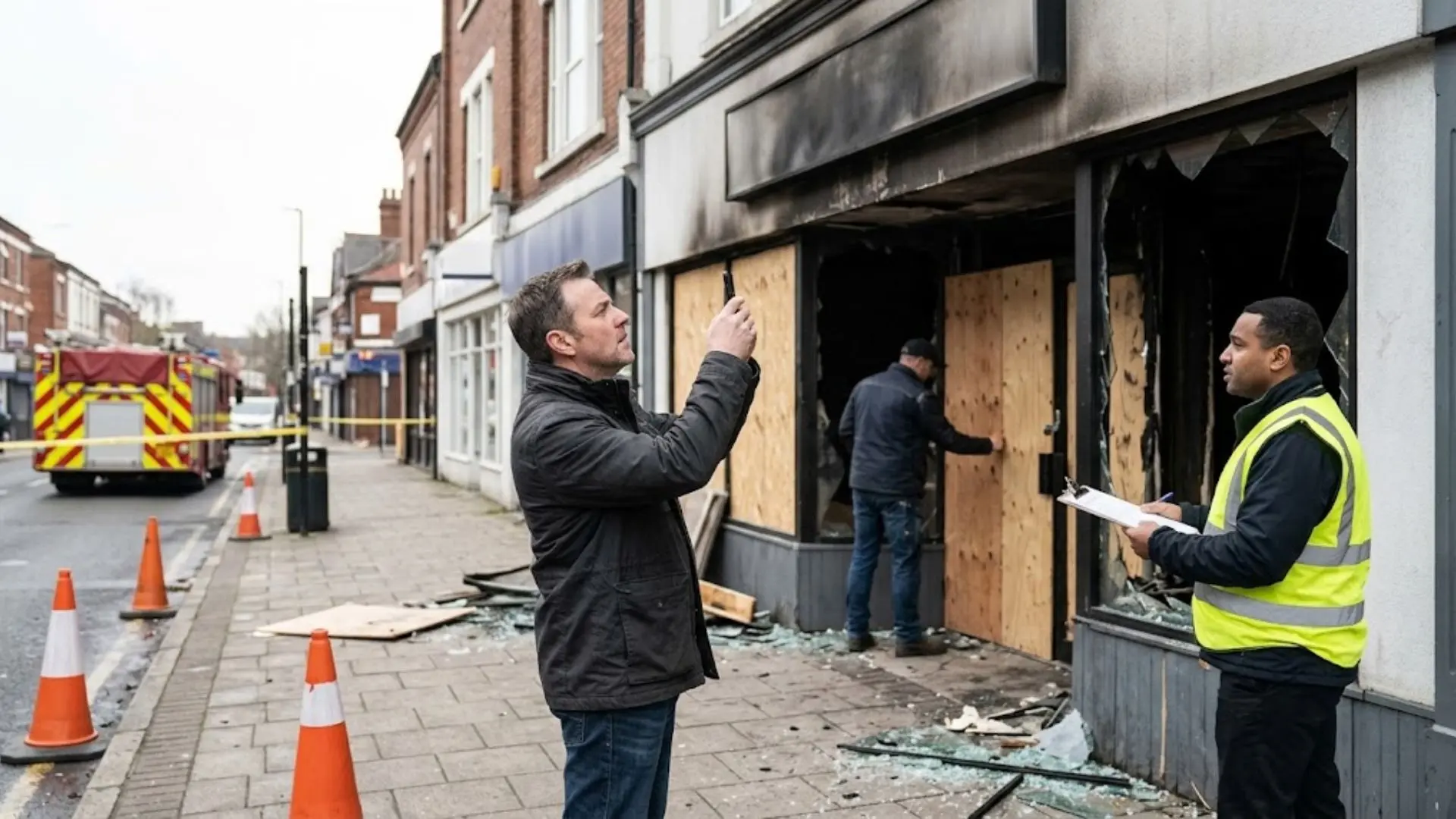
The first hours after discovering damage shape how quickly a business recovers. Clear, calm action protects both the property and any future insurance claim. The steps below are a practical starting point for owners and property managers.
- Prioritize safety. Keep staff and customers away from standing water, damaged structures, and electrical hazards until the area is confirmed safe.
- Stop the source if you can do so safely, such as shutting off a water supply valve.
- Document everything with photos and video before anything is moved or cleaned.
- Contact your insurance carrier to report the loss and understand your coverage.
- Call a professional restoration team early, since the longer damage sits, the more it spreads.
Avoid the temptation to fully clean up or discard items before documentation is complete, as that can complicate a claim. It also helps to keep a simple written log of when the damage was discovered and what actions were taken.
Keeping Your Jupiter Business Running During Restoration
For a commercial property, downtime is often the biggest cost of all. A core goal of commercial restoration is minimizing disruption so the business can keep operating, even partially, while the work gets done.
Where the situation allows, that can mean containing the work area, phasing the project so unaffected sections stay open, and scheduling disruptive tasks around operating hours. Clear communication helps too: knowing the timeline and what to expect lets owners plan staffing, notify customers, and make decisions with confidence. Our role is to handle the restoration so you can focus on the business side of reopening.
How Commercial Restoration and Insurance Work Together
Most commercial property damage is handled through an insurance claim, and good documentation is what keeps that process moving. Detailed records of the damage, the scope of work, and the materials involved give the carrier what it needs to evaluate the claim.
Restoration and insurance work in parallel. While the carrier reviews the loss, mitigation should still begin quickly to prevent further damage, since most policies expect reasonable steps to limit the loss. We document conditions and the work performed so owners have a clear record to share with their adjuster. Coverage details and claim outcomes are determined by your specific policy and carrier, so it is always worth confirming your coverage directly with your insurer.
When to Call a Professional Restoration Company
Call a professional when the damage affects structural materials, spreads beyond a small area, involves contaminated water, or threatens to keep the business closed. These situations move quickly and are difficult to handle with in-house staff alone.
Commercial damage also tends to involve hidden moisture, larger square footage, and code requirements that a general cleanup cannot address. Professional restoration brings the equipment, process, and coordination to dry, clean, and rebuild correctly the first time. Acting early almost always reduces both the cost and the length of the closure.
Frequently Asked Questions
How Fast Should I Act After Commercial Water Damage?
Act immediately. Water spreads into drywall, subfloors, and wall cavities within hours and can lead to mold within a day or two. Fast extraction and drying limit the damage, the cost, and the time your business stays closed.
Can My Business Stay Open During Restoration?
Often, yes, at least partially. Where the situation allows, the work area can be contained and the project phased so unaffected sections remain usable. The right approach depends on the damage type, its location, and the layout of your space.
What Types of Property Damage Does Commercial Restoration Cover?
Commercial restoration covers water, storm, fire and smoke, and mold damage, along with the reconstruction that follows. It combines emergency mitigation, cleanup, structural drying, and repairs into one coordinated project.
Will Insurance Cover Commercial Restoration?
Coverage depends on your specific policy and carrier. Many commercial property losses are handled through a claim, and thorough documentation of the damage and the work performed supports that process. Confirm the details directly with your insurer.
Why Choose a Team That Handles Both Mitigation and Reconstruction?
Having one team manage both phases means fewer handoffs, a clearer timeline, and a single point of contact. The transition from drying to rebuilding stays coordinated, which helps the property reopen sooner.
Final Thoughts on Commercial Restoration Services in Jupiter, FL
Property damage at a commercial building is a business problem as much as a building problem. The faster it is contained, the sooner you reopen and the less it ultimately costs. Commercial restoration brings mitigation, cleanup, drying, and reconstruction together so you are not coordinating the recovery alone.
If you are managing water, storm, fire, or mold damage at a Jupiter, FL business, document the conditions, notify your insurer, and bring in a professional team early. Our commercial restoration services are here to stabilize your property and get it back to work. Reach out to Titan Restoration Construction when damage threatens your operations, and we will help you move from response to reopening.
0 Comments